Context
Clínica Júlia Martins needed a premium digital experience for a medical and aesthetic clinic. The work was not just a visual exercise: it had to support trust, orientation and a clear path into human service.
The tension
The central design problem was balancing medical trust, premium aesthetics, humanity and conversion. Medical credibility needed responsibility and restraint without becoming cold or hospital-like. Premium direction needed to avoid generic beauty-clinic templates, while the experience still had to feel warm and approachable.
Art direction
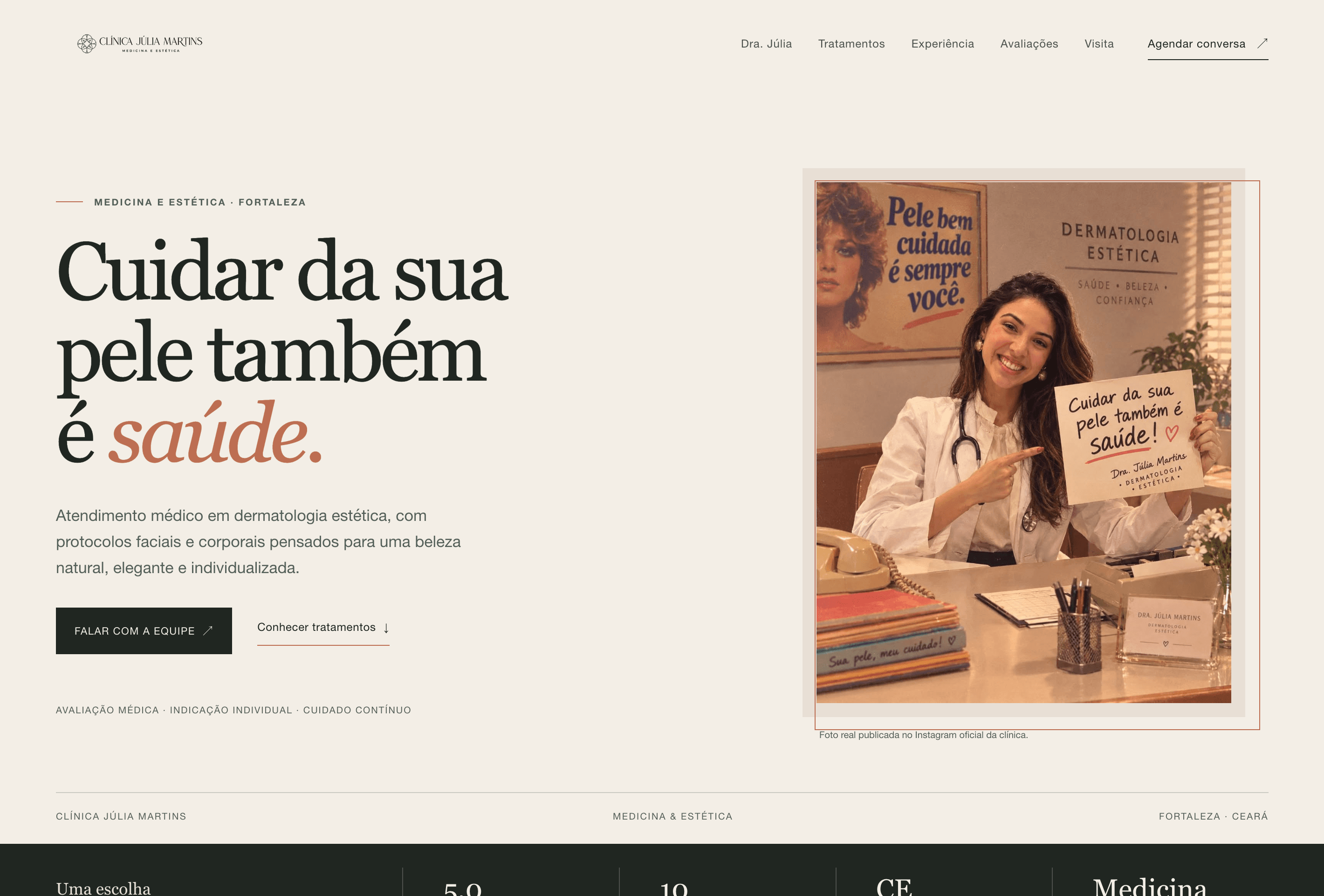
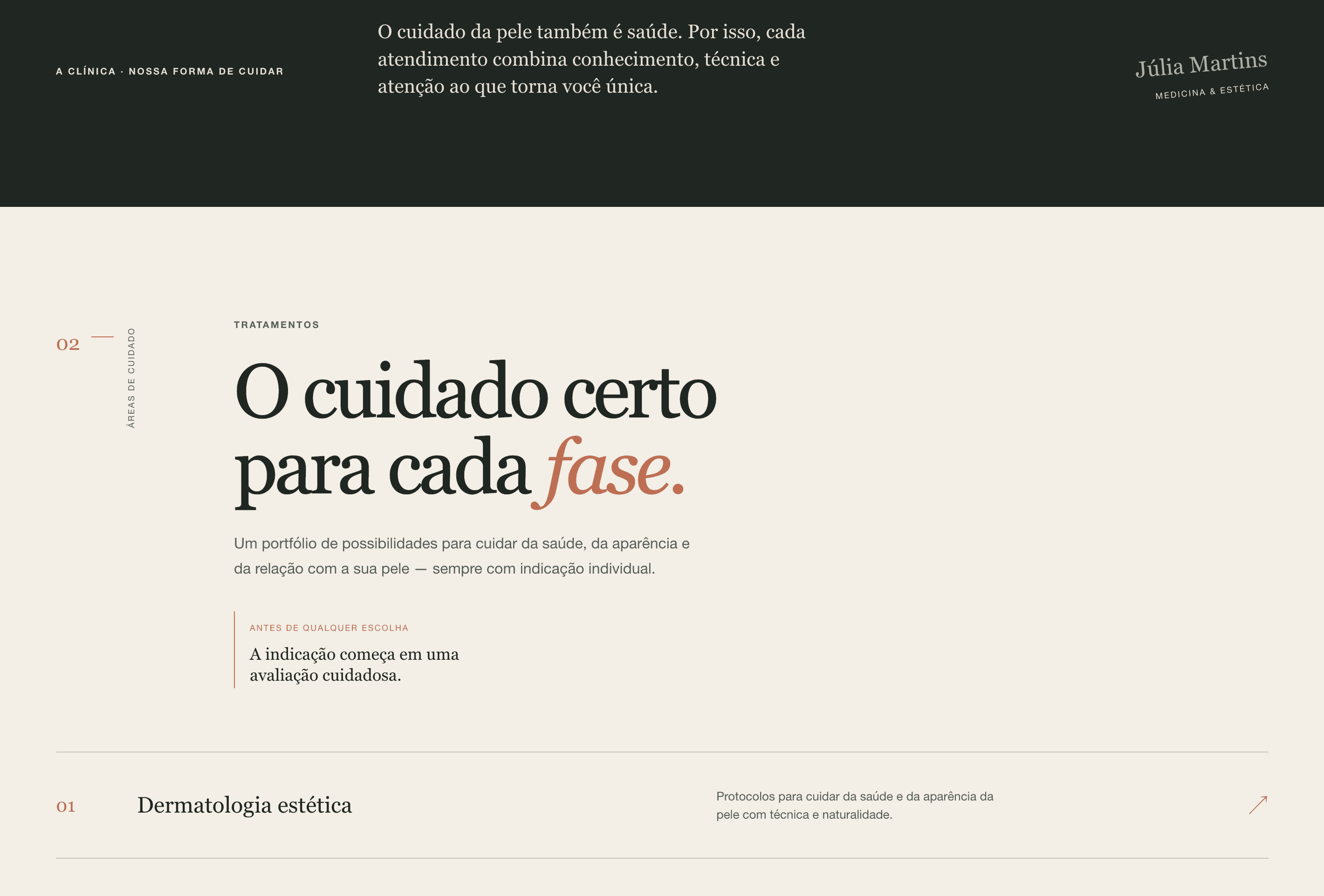
The final direction combines editorial composition, warm off-white, terracotta, sage, deep neutral surfaces, serif display type, restrained sans-serif UI type, generous whitespace and real photography. The intended character is a premium medical clinic with editorial direction, not a generic aesthetic-clinic landing page.
Iteration
The first polished version was not accepted as final. Review found poorly cropped photography, too many dark surfaces, weak medical authority, excessive abstraction, mobile spacing issues, oversized headings, decorative noise, weak treatment presentation, unclear CTA hierarchy, generic copy and external-link problems.
Those findings led to progressive corrections across hierarchy, crops, spacing, treatment presentation, copy, WhatsApp intent and the Google Maps destination. The quality came from iteration and review rather than a one-shot generation.
Photographic integrity
The real photography of Dra. Júlia was a product requirement. No face or body was regenerated or modified, no generative replacement was used and no stock image was presented as the clinic. When the official brand kit arrived, it contributed verified logos, symbols, patterns and typography references; it did not replace the existing real photography.
Brand integration
The brand kit arrived after much of the digital experience had already matured. Official logos were integrated, typography was evaluated rather than replaced automatically and successful product-design decisions were preserved. This was a judgment between brand fidelity and product quality, not blind application of a brand guide.
Conversion design
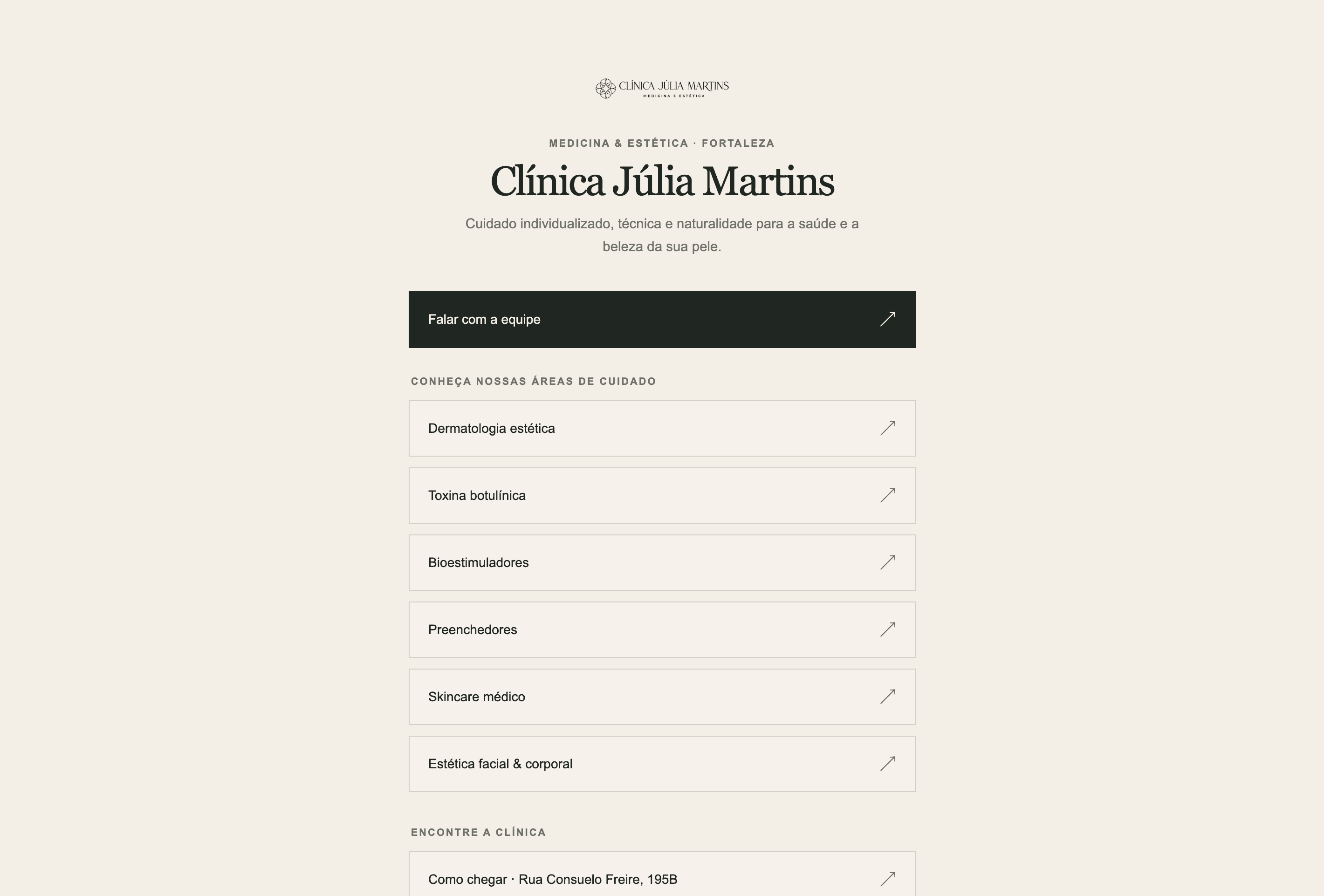
WhatsApp was treated as a contextual service path rather than a generic button. Treatment CTAs preserve intents such as botulinum toxin, aesthetic dermatology, biostimulators, fillers, medical skincare and facial and body aesthetics. General CTAs use a general appointment or service intent.
First-party link hub
The clinic also needed an Instagram link hub. The /links/ experience keeps WhatsApp, treatments, Instagram, Maps and the main website in a branded first-party surface instead of adding a generic external dependency.
Responsive refinement
Responsive review covered 360px, 375px, 390px, 412px, 430px, 600px, 768px and 1440px. Typography wrapping, image crops, spacing, CTA sizes, navigation, FAQ, footer, treatment interactions and horizontal overflow were reviewed with mobile treated as a primary surface.
Shipping and evidence
The canonical production site is clinicajuliamartins.vercel.app (opens in a new tab), with the first-party link hub at /links/ (opens in a new tab). The final production commit is 60003327518434686737962a0297e171b5190b26, released on September 15, 2026 through Vercel Production on main.
This record uses real production captures. The Portuguese interface remains visible in the evidence because it is the clinic’s actual surface; the NorthCore editorial record is in English.
Lessons
Premium digital experiences for trust-sensitive businesses depend on restraint, evidence and review. The delivered result is best understood as product design, frontend engineering and delivery working together—not as another website made in isolation.